
Emojis on Your Resume? Here's Why ATS Systems Reject Them
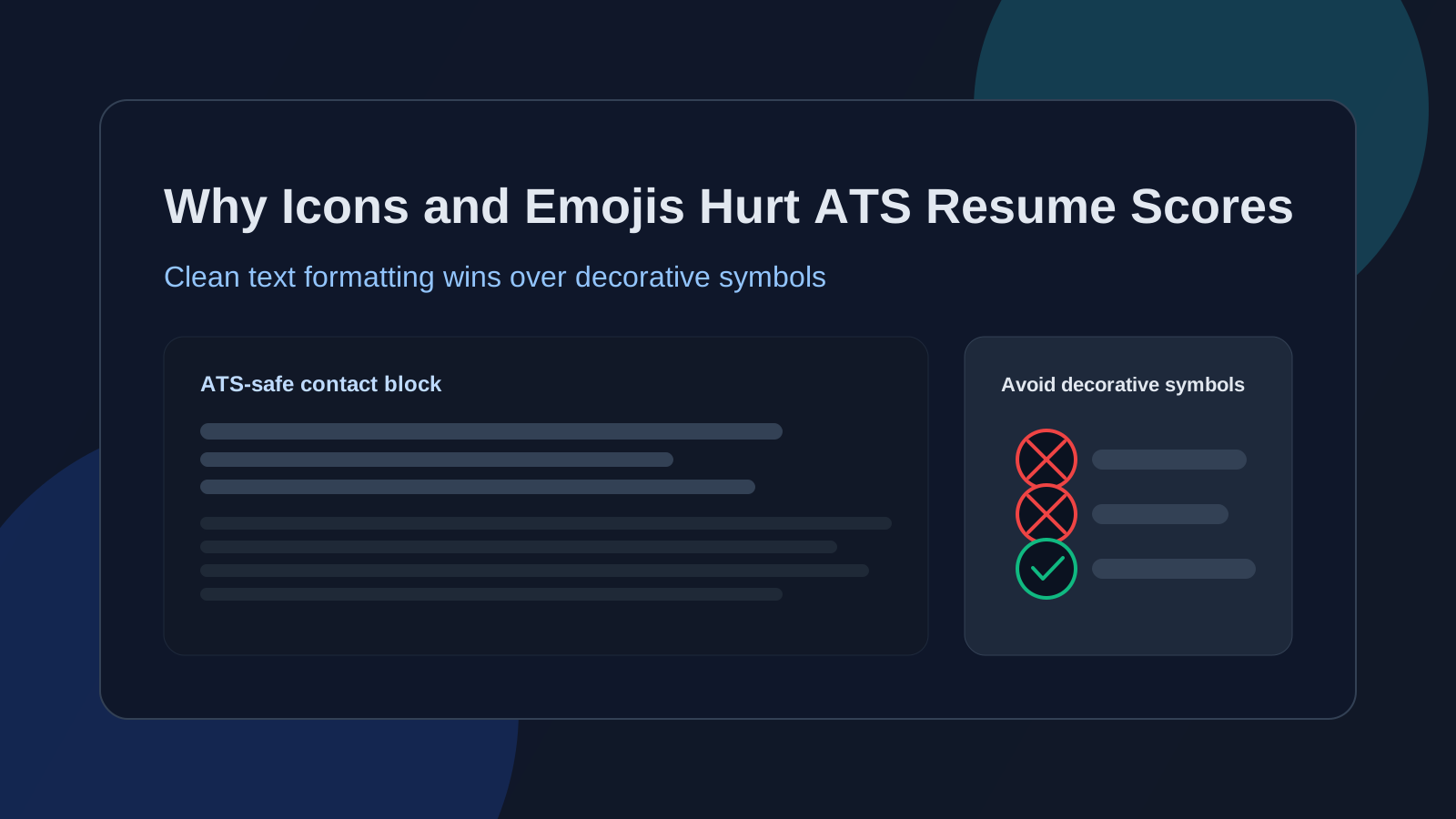
Why Icons and Emojis Can Kill Your Resume ATS Score
Many resumes look impressive but still fail at the first technical step: parsing by an Applicant Tracking System (ATS).
One of the most common reasons is surprisingly simple: decorative icons and emojis.
A phone symbol beside your number, a location pin beside your city, stars in a skills section, or visual icons for sections may look polished. But for ATS software, these symbols can create noise, break field extraction, and reduce keyword matching confidence.
If your goal is interviews, not just aesthetics, this is a formatting risk you should remove.
The Hidden Tradeoff: Better Design vs Better Parsing
Modern resume templates often prioritize visual appeal:
- contact icons
- emoji bullets
- section symbols
- star ratings
- graphic timelines
These elements can improve visual style for a human reviewer. The problem is that ATS parsing is not visual. It is text extraction and pattern recognition.
When a parser reads your file, it does not "see" your design the way a recruiter does. It reads characters, blocks, tags, and token order. That is where icons and emojis can introduce ambiguity.
How Icons and Emojis Damage ATS Scoring
1. Contact Information Can Parse Incorrectly
A common pattern is:
phone icon + number
mail icon + email
In some systems, the symbol is ignored. In others, it merges with the text token and can interfere with extraction rules. That can mean:
- phone number not recognized as phone
- email parsed with extra characters
- contact fields not mapped cleanly
If your contact data is not extracted reliably, your resume may rank lower or appear incomplete.
2. Keyword Matching Gets Weaker
ATS ranking relies heavily on keyword signals from clear text. Emojis and icon glyphs can interrupt text flow in ways that reduce confidence in tokenization.
For example, skill lists like:
data analysis icon SQL
chart icon Power BI
gear icon Python
look clean visually, but plain text extraction may not preserve ideal spacing or structure. Small parsing friction can weaken exact keyword matching, especially in strict filters.
3. Section Labels Become Less Reliable
Some resumes use symbols before headings, such as:
briefcase icon Experience
mortarboard icon Education
If the heading text is not isolated cleanly, section classifiers can misread structure. ATS systems work best with explicit, plain labels:
- Experience
- Education
- Skills
- Certifications
When structure confidence drops, overall ATS compatibility usually drops too.
4. Graphic Skill Ratings Are Often Wasted
Star bars, emoji scales, and icon-based proficiency visuals are not machine-friendly evidence.
ATS systems generally prefer plain, searchable skill terms and context.
A row of symbols adds almost no ranking value compared with:
- concrete skill names
- tools and technologies
- achievement bullets with measurable outcomes
5. PDF/Icon Font Rendering Can Create Extraction Noise
Even when your content looks perfect on screen, embedded icon fonts or special Unicode characters in PDF output can produce inconsistent text extraction across systems.
That means two companies can parse the same resume differently.
Consistency is critical in ATS workflows, so minimizing non-essential symbols is the safer strategy.
"But Icons Make My Resume Look Better"
True. They often do.
But the resume pipeline is sequential:
- ATS parsing
- ATS ranking/filtering
- human review
If you lose at step 1, visual polish at step 3 does not matter.
The most effective approach is machine-first clarity with human-friendly readability. You can still have a strong-looking resume without symbols that introduce parsing risk.
ATS-Safe Alternatives That Still Look Professional
Use this instead of icons/emojis:
Phone: +1 555 123 4567Email: name@domain.comLocation: Austin, TXLinkedIn: linkedin.com/in/yourname
For skills, replace visual ratings with grouped plain text:
- Languages: Python, SQL, JavaScript
- Data: Tableau, Power BI, Excel
- Cloud: AWS, GCP
For bullets, use standard bullet points and measurable impact statements, not emoji markers.
Quick Before/After Example
Risky Version
- phone symbol
+1 555 123 4567 - mail symbol
name@domain.com - pin symbol
New York, NY - chart symbol
Data Analysis - star symbols
Leadership 5/5
ATS-Safe Version
- Phone: +1 555 123 4567
- Email: name@domain.com
- Location: New York, NY
- Skills: Data Analysis, SQL, Python
- Leadership: Led cross-functional team of 8 across 3 product launches
The second version is clearer for both ATS and recruiters.
Practical Rules to Follow
- Remove icons and emojis from contact lines.
- Use plain section headings with standard names.
- Keep skills as text, not symbol ratings.
- Avoid decorative glyphs as bullet markers.
- Save visual styling for spacing, typography, and hierarchy, not symbols.
- Export to a clean, text-readable format and review extracted text quality when possible.
Final Takeaway
Icons and emojis are not always catastrophic, but they are unnecessary ATS risk.
When competition is high, small parsing issues can be the difference between being surfaced and being filtered out.
A resume that is simple, explicit, and text-forward will usually outperform a more decorative version in ATS environments.
If you want more interviews, prioritize clarity over ornament.
Good design should support readability, not compete with machine parsing.
FAQ: Icons, Emojis, and ATS Resume Scoring
Do icons hurt your ATS score?
Yes. Icons and emoji glyphs can break the text extraction that ATS systems rely on for keyword matching and field recognition. They introduce parsing ambiguity that often lowers your overall ATS compatibility score.
Should I use emojis on my resume?
No. Emojis are not machine-readable in a consistent way across ATS platforms. They may render as symbols, question marks, or empty characters during parsing, which can damage how your resume is read and ranked.
What should I use instead of icons on my resume?
Use plain text labels for contact information (e.g., "Phone:", "Email:", "LinkedIn:") and standard section headings like "Experience", "Skills", and "Education" without decorative symbols. This ensures consistent ATS parsing across all systems.
Which ATS systems reject resumes with icons?
Most major ATS platforms, including Workday, Greenhouse, Lever, iCIMS, and Taleo, can struggle with icon-heavy resume formats. The safest approach is to assume any ATS may have difficulty parsing non-text elements.
Can I still make my resume look good without icons?
Absolutely. Strong visual design comes from clean typography, consistent spacing, good use of white space, and a logical hierarchy — not decorative symbols. ATS-safe resumes can look polished and professional.