
CV vs Resume: What Is the Real Difference?
CV vs Resume: What Is the Real Difference?
Most candidates use "CV" and "resume" as if they mean the same thing. Sometimes that is fine. Sometimes it causes application mistakes.
If you apply with the wrong document type, you can look unprepared before your qualifications are even reviewed.
This guide gives you a practical way to decide which one to send.
Quick Answer
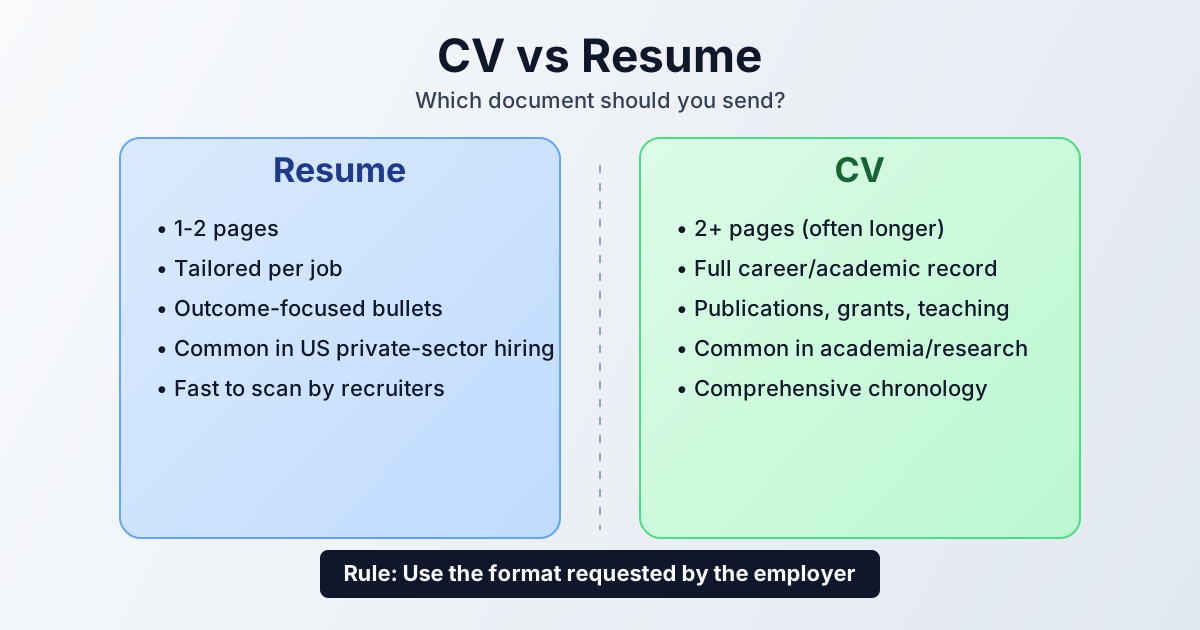
A resume is usually shorter and job-specific. A CV (Curriculum Vitae) is usually longer and more comprehensive.
In the United States:
- Most private-sector jobs ask for a resume
- CVs are mainly used for academia, research, medicine, and some grant/fellowship applications
In many countries outside the US, "CV" is also used to mean what Americans call a resume. That naming difference creates most of the confusion.
CV vs Resume at a Glance
-
Typical length Resume: 1-2 pages CV: 2+ pages (can be much longer)
-
Goal Resume: Win interview for a specific role CV: Document full academic/professional history
-
Customization Resume: Tailored per job CV: Less customized per role, more complete record
-
Content depth Resume: Selected highlights CV: Comprehensive details
-
Common use Resume: Corporate/private-sector hiring CV: Academia, research, clinical, grants
-
Update style Resume: Frequently for each application CV: Ongoing master document
What a Resume Includes
A strong resume is selective. It focuses on relevance, not completeness.
Typical sections:
- Contact information
- Summary (optional but useful when targeted)
- Work experience with measurable impact
- Skills aligned to the target role
- Education
- Certifications/projects (as needed)
A good resume answers one question quickly:
"Why should this person be interviewed for this exact role?"
What a CV Includes
A CV is broader and record-oriented. It can include everything needed to evaluate your long-term body of work.
Typical sections:
- Contact information
- Academic background
- Research interests
- Publications
- Conference presentations
- Teaching experience
- Grants, funding, fellowships
- Awards and honors
- Professional memberships
- References (sometimes)
A CV answers a different question:
"What is this person's full academic or professional trajectory?"
When to Use a Resume
Use a resume if you are applying for:
- Most business, tech, operations, sales, finance, design, marketing, and product roles
- Roles posted on standard corporate career pages in the US
- Positions with high applicant volume where concise relevance matters
If the posting says "resume preferred" or gives no special instruction, send a resume.
When to Use a CV
Use a CV if you are applying for:
- University faculty positions
- Postdoctoral or research scientist roles
- Clinical/medical academic roles
- Grant-funded projects
- Fellowship or scholarship applications
If the posting explicitly says "Submit CV," follow that instruction exactly.
Geography Matters
The label can change by region.
- US/Canada (most private roles): resume is standard
- UK, Europe, parts of Asia/Africa: "CV" often means resume-style document
Always read the job description language first. If needed, match the wording used by the employer.
Common Mistakes Candidates Make
- Sending a long academic CV to a standard corporate role
- Sending a one-page resume for a research role that expects publication history
- Using one master file for every application without tailoring
- Listing duties instead of outcomes
- Ignoring role-specific terminology from the job description
How to Convert a CV into a Resume
If you already have a CV, you can build a resume quickly by trimming and prioritizing:
- Copy only recent, relevant experience
- Keep 3-6 bullets per role focused on outcomes
- Remove full publication lists unless directly relevant
- Compress old roles into short summary lines
- Align skills with the target job description
- Keep total length concise (usually 1-2 pages)
Think of your CV as your source database and your resume as your targeted output.
How to Convert a Resume into a CV
If you are moving into academic/research hiring:
- Expand education details (thesis, advisors, distinctions)
- Add publications and presentations with full citations
- Include grants, teaching, committee, and service work
- Add memberships, licenses, and certifications where relevant
- Keep chronology complete and consistent
In CV mode, completeness matters more than brevity.
Should You Keep Both?
Yes. The best setup is:
- Master CV: your complete career record
- Target resumes: tailored versions for specific jobs
This prevents rewriting from scratch every time and helps you apply faster while keeping quality high.
Practical Decision Rule
Use this simple rule before every application:
- If role is corporate and impact-driven: resume
- If role is academic/research and portfolio-driven: CV
- If unclear: mirror the employer's wording and instructions
Final Takeaway
A resume and CV are not competitors. They are different tools.
Use a resume when you need focused relevance for a specific job. Use a CV when evaluators need your full professional or academic record.
Choosing the right format is a small decision that can create a real advantage: clearer first impressions, better screening outcomes, and fewer avoidable rejections.
FAQ: CV vs Resume
Is a CV the same as a resume?
Not always. In many US hiring contexts, they are different document types. In some countries, "CV" is just the local name for a resume-style application document.
Can I send a CV instead of a resume?
Only if the employer asks for a CV or the role is in an academic/research context. For standard private-sector jobs, a targeted resume is usually better.
Which is better for ATS: CV or resume?
ATS systems do not prefer one label by default. They prefer clear structure, readable formatting, and keyword relevance. For most corporate roles, concise role-targeted resumes tend to perform better.